We spend enormous amounts of money installing evaporative cooling systems to protect animals and maintain optimum temperatures, humidity and ventilation for growing birds and relief from heat stress. But how much attention do we give to maintaining the surfaces that actually deliver that cooling?
Maintaining evaporative cooling pads is essential to maintaining their maximum functional efficiency. By adopting a regular maintenance program which is simple and low-cost, you can extend the life of your evaporative cooling system for years before you need to replace it.
At the same time as maintaining the system, you can also disinfect it, meaning the viruses, bacteria and fungi that build up in the pads from the external air are killed and inactivated.
This includes infectious Avian Influenza viruses carried on short-range air and dust, which typically travel less than 10 to 100 meters, though viral RNA traces that have been detected up to 150 meters to 1 kilometre away.1
This treatment process significantly reduces the risk of transmission of pathogens including Avian Influenza and Aspergillus from dust and dirt build-up in the pads.
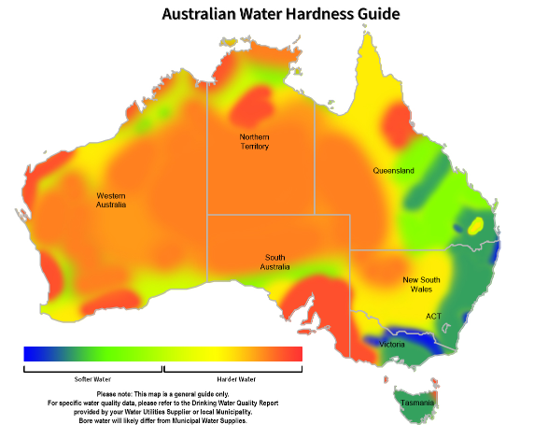
The other key feature of maintenance is the removal of scale deposits. As water evaporates off the pads into the fan-driven air, the calcium in water stays on the pad. The map below will tell you just how quickly that build-up will occur. The more yellow, orange or red your area is, the quicker your pads will build up calcium scale.
The graph below is a composite of several published papers2 on the decline in evaporative cooler pads’ efficiency over time, it is inevitable that pads will need replacing at some point but with regular maintenance, that investment in thousands of dollars on replacement evaporative cooler pads is delayed, sometimes for years.
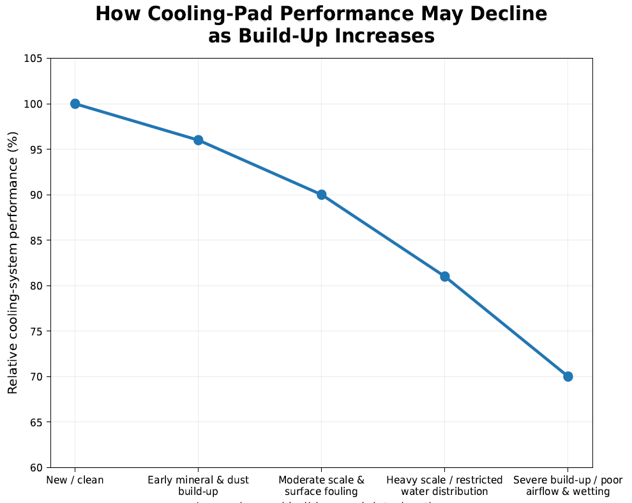
As the pads’ efficiency declines, your electricity, fan maintenance costs, bearings, belts and motors increase as the fans have to be on for longer periods of time to maintain the same temperature and humidity. As the graph above progresses, your costs increase right down to the inevitable replacement cost.
In addition, even a cursory view of peer-reviewed papers reveals a host of pathogens lurking in cooler pads; these are just a few examples.
Common Microorganisms Found in Poultry Evaporative Cooling Pads
| ▪ BACTERIA | ▪ VIRUSES | ▪ FUNGI / MOULDS |
| Escherichia coli | Avian Influenza Virus | Aspergillus fumigatus |
| Salmonella enterica | Newcastle Disease Virus | Aspergillus flavus |
| Pseudomonas aeruginosa | Infectious Bronchitis Virus | Penicillium spp. |
| Enterococcus faecalis | Cladosporium spp. | |
| Staphylococcus aureus | Alternaria spp. | |
| Campylobacter jejuni | Candida spp. | |
| Sulphur-oxidising bacteria | ||
| Biofilm-forming bacteria |
A minimum of annual maintenance can reduce those costs and maintain evaporative cooler pad efficiency; ideally, in hard water areas, maintenance frequency should be increased.
Spring is the ideal time to carry out this maintenance as the demand on the system increases as the temperature increases and, in the extreme, the treatment might mean the difference between a dead crop from heat stress or survival on exceptionally hot days or weeks.
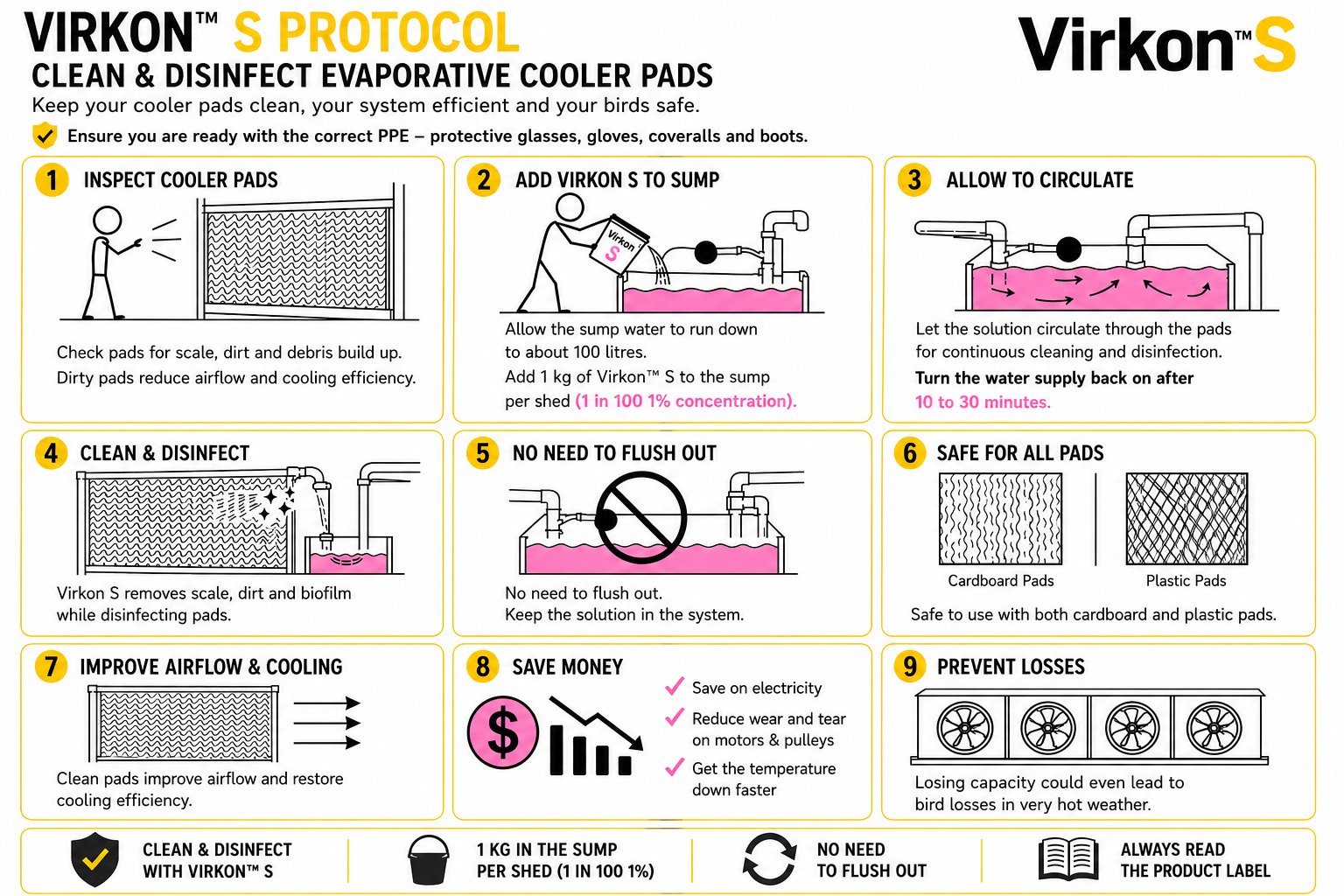
Treatment is quite straightforward; Virkon™ S is used for the dual purpose of reducing scale and killing and inactivating pathogens at the same time.
Also, Virkon™ S is completely safe to use for maintaining and disinfecting evaporative cooler pads; it will not damage any cardboard or plastic-based materials used in their construction.
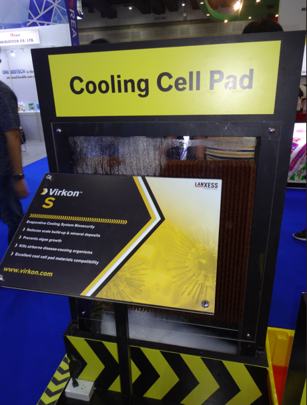
Here is an evaporative cooling pad at a VIV Asia exhibition immersed in a solution of Virkon S for several days with no negative impacts to its materials or structural integrity.
With this treatment, you are getting twice the cluck for your buck, as it is maintenance that pays for itself with
✔ Better cooling performance
✔ Lower electricity costs
✔ Longer cooler pad life
✔ Reduced pathogen build-up
✔ Improved heat stress management
For more information, contact your local Alltech Lienert representative or call 1800 649 231.
References:
- *2023 Apr 19;15(4):1002. doi: 10.3390/v15041002. The Role of Airborne Particles in the Epidemiology of Clade 2.3.4.4b H5N1 High Pathogenicity Avian Influenza Virus in Commercial Poultry Production Units
- Available on request.
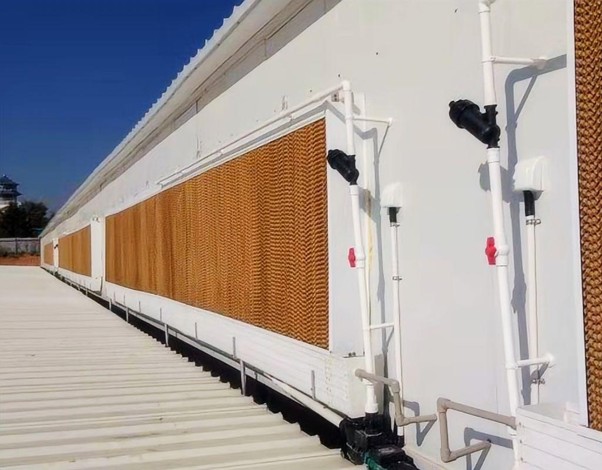
- Header image source: https://www.qingdaoejoy.com/poultry-pvc-frame-cooling-pad-system.html